Geopolitics Daily Brief - July 10, 2026
Five stories on Hormuz shipping, Tencent's possible Manus buyback, Scarborough Shoal pressure, renewed Russian refinery strikes and fibre-optic drone attacks on Ukraine's grid, with market and supply-chain implications for energy, AI, maritime risk and power infrastructure.

Energy transport is the main commercial stress: LNG tankers are returning to Hormuz while Japan-linked vessels continue leaving the Gulf. In Asia, China's AI-control fight has moved into dealmaking, and Beijing's maritime pressure is generating a different kind of cost in Philippine waters.
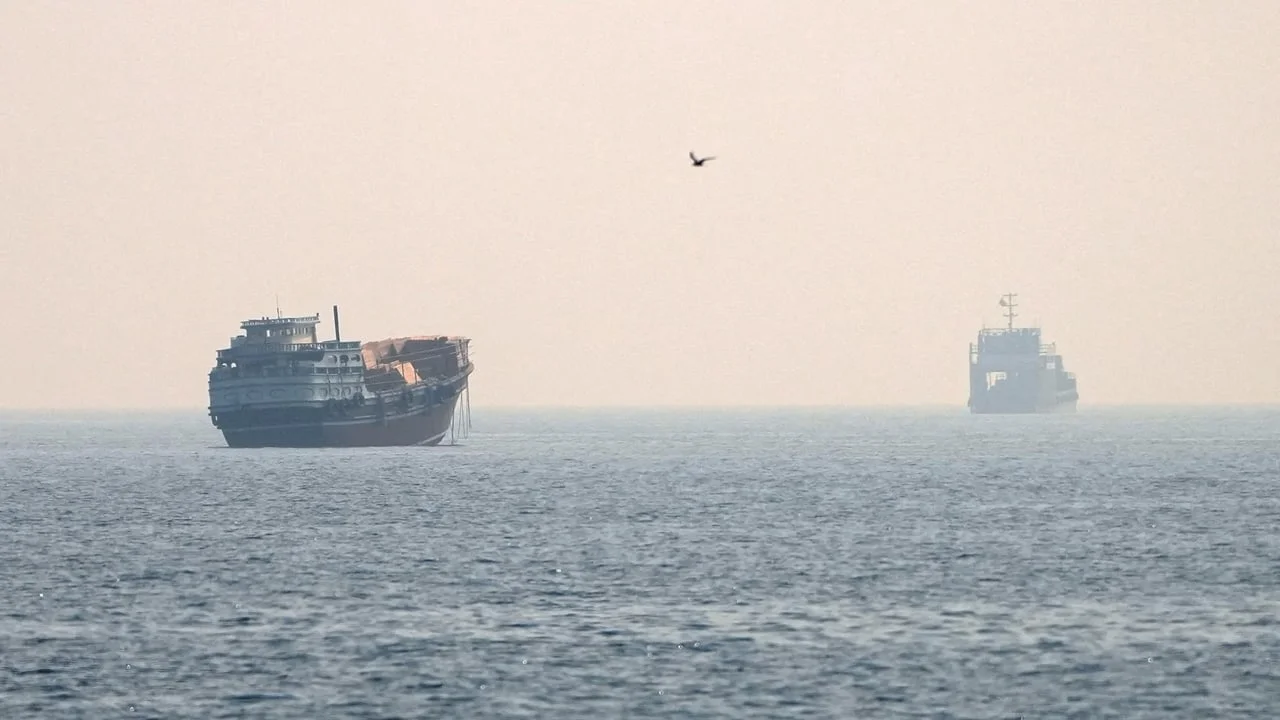
1. Hormuz traffic resumes unevenly as LNG and Japan-linked ships move
- More LNG tankers have resumed transiting the Strait of Hormuz, and 22 Japan-linked vessels have left the Gulf since Tuesday despite renewed fighting in the Middle East. 1
- At least five ballast LNG tankers have entered the strait in recent days, including GasLog Shanghai and four QatarEnergy-linked carriers. 1
- Japan-linked vessels in the Gulf have fallen from 45 ships with about 1,100 crew members at the start of the conflict to four ships with about 100 crew members. 1
Market / supply-chain impact. This is a partial risk-managed reopening, not a clean return to normal. Reuters reported Brent at $76.34 a barrel and WTI at $72.15 at 03:19 UTC, with Brent set for a weekly gain of about 6% and WTI for about 5%. 2 Vessel owners may still price in higher war-risk insurance, routing uncertainty and dark-transit risk, especially for LNG and crude cargoes tied to Gulf loading windows.
2. Beijing's Meta-Manus order turns into a Tencent buyback track
- Tencent is in talks to become Manus' largest shareholder after Beijing ordered Meta to unwind its $2 billion acquisition of the AI-agent startup, two people with knowledge of the matter said. 3
- Tencent and Manus' original investors, including ZhenFund and HSG, are planning to buy the company back from Meta for no less than $2 billion, according to one source and a third person briefed on the matter. 3
- Manus moved its operations to Singapore last year; China launched an April review into whether Meta's deal violated investment rules. 3
Market / supply-chain impact. AI companies with Chinese origins are becoming regulatory assets even when their corporate operations sit offshore. The deal risk is no longer limited to export controls on chips: cross-border ownership, data sharing and agentic-AI know-how can all be pulled into the same U.S.-China control environment. For investors, the practical cost is a wider discount on AI M&A exits involving China-linked founders, datasets or model capabilities.
3. Scarborough Shoal pressure keeps the South China Sea on the board
- A decade after the 2016 arbitration ruling against China's sweeping maritime claims, Filipino fishermen told Reuters they are too afraid to return to Scarborough Shoal because of harassment by Chinese vessels. 4
- The shoal has been under China's de facto control since 2012, and the 2016 tribunal did not rule on sovereignty over the feature. 4
- Fishermen alleged water-cannon use and cut anchor lines; China's embassy in Manila did not immediately respond to Reuters, while Beijing has long said it does not recognize the tribunal decision. 4
Market / supply-chain impact. The immediate economic loss is local fishing income, but the larger commercial signal is maritime operating risk in a sea lane that also hosts U.S., Japanese, Australian and Philippine security activity. Reuters noted that the ruling has supported Manila's public-transparency campaign and deeper defence cooperation with allies. 4 For shippers and insurers, repeated low-level confrontations make routine route planning harder to separate from political-risk planning.
4. Ukraine's drone campaign hits another Russian refinery and port area
- Russia's Ilsky oil refinery in Krasnodar caught fire after a drone attack, while authorities in Taganrog evacuated people after a separate strike, local officials said. 5
- Ilsky has capacity of around 138,000 barrels per day and has been attacked several times before. 5
- Russia's Defence Ministry said air defences downed 376 Ukrainian drones overnight; fires were also being extinguished at two fuel depots and the Taganrog sea port. 5
Market / supply-chain impact. Refinery strikes are now a recurring fuel-logistics cost rather than a one-off disruption. Reuters reported that earlier refinery attacks have contributed to fuel shortages, long filling-station queues and price rises across Russia. 5 The operational question for fuel buyers is whether regional depots and ports can absorb repeated overnight drone waves without forcing longer internal rerouting.
5. Russia's fibre-optic drones expose a new grid-repair problem in Ukraine
- Russia has used small fibre-optic FPV drones to bypass Ukrainian electronic-warfare defences and damage high-voltage substations in Sumy, open-source analysis verified by the Centre for Information Resilience and Reuters showed. 6
- CIR verified four strikes on large 330 kV substations and at least four more on smaller 110 kV substations; a 330 kV autotransformer is worth about $3.5 million. 6
- The 330 kV strikes were 16 to 26 km from the frontline, and a fibre-optic FPV drone can cost as little as $2,000. 6
Market / supply-chain impact. The cost ratio matters: low-cost drones can force expensive grid repairs and repeated outages. If the tactic spreads, Ukraine's frontline regions face more pressure on industrial power supply, rail logistics, cold-chain storage and emergency repair inventories. The main procurement implication is demand for physical hardening, spare transformers and local anti-drone systems that do not rely only on radio-frequency jamming.
References
- 1More LNG, Japan-linked vessels transit Hormuz despite renewed Mideast tensions
- 2Oil heads for weekly gain as Middle East supply risks persist
- 3Tencent in talks to become AI startup Manus' largest shareholder, sources say
- 4A decade after historic ruling, Philippine fishermen say driven away from disputed shoal by China
- 5Russia's Ilsky oil refinery catches fire, Taganrog evacuates after drone attacks
- 6Russia evades Ukraine electrical substation defences with small, unjammable drones
Related content
- Sign in to comment.